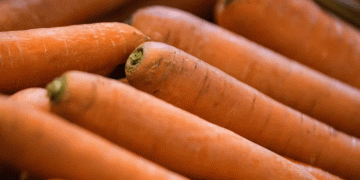




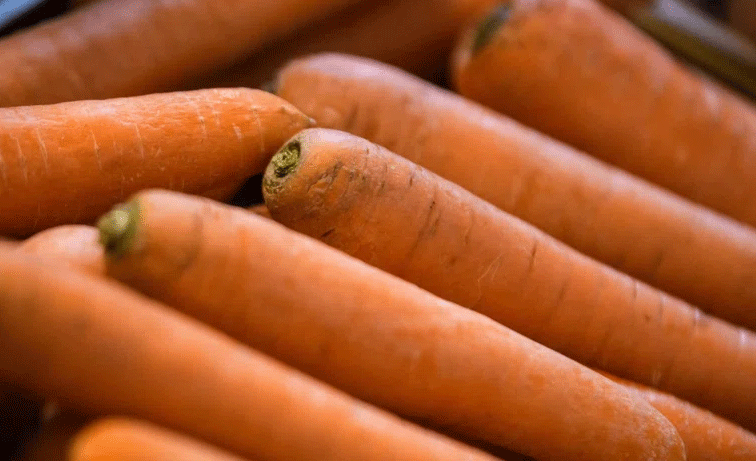
In the Yekul region of Chelyabinsk, Russia, a novel agricultural experiment is defying the seasonal norms. With daytime temperatures now firmly below freezing, specialists from the regional branch of the “Rosselkhoztsentr” (Federal State Budgetary Institution for Agricultural Consulting and Methodology) have initiated a trial to sow carrot seeds directly into the frozen ground and snow. This practice, known as winter or “podzimniy” sowing, is not entirely new in horticulture, but its systematic application and evaluation for carrots in this specific climate mark a significant investigative step. The core hypothesis from its proponents is compelling: carrots sown in this manner are said to develop into more succulent, flavorful, and aromatic roots, potentially offering a premium product for the market.
The trial was born from a practical, widespread problem. In recent years, agronomists have been repeatedly approached by both farmers and home gardeners puzzled by inconsistent germination results. A common scenario involves seeds from the same packet yielding poor germination when sown in early May, but the remainder of the same seeds sown just two to three weeks later performing significantly better. This inconsistency points to a critical, climate-sensitive “sweet spot” for soil temperature and moisture at sowing time. To explore an alternative that bypasses this spring uncertainty, the Yekul team designed a controlled experiment. They selected three carrot varieties with differing maturity dates—Nantskaya 4 (mid-season), Medovaya (“Honey,” mid-late), and Berlikum Royal (late)—to test the method’s effectiveness across a spectrum. The unseasonably warm autumn, with November temperatures roughly 7°C above the long-term average, actually delayed the sowing until early December to ensure the soil was reliably frozen and prevent premature germination.
The experimental design incorporates both traditional and innovative site selection. One batch of seeds was sown in a prepared garden bed with pre-made furrows. Another batch was placed in a more unconventional location: under an apple tree in an area previously used for pumpkins. This leverages observed horticultural wisdom that the “root zone” of fruit trees can be a favorable microclimate for winter-sown crops. In spring, the young tree foliage provides only light shade, while the canopy helps retain crucial soil moisture and protects tender seedlings from drying winds—a significant advantage in potentially arid conditions. The final assessment of germination rates, root development, yield, and, most importantly, sensory quality (taste and texture) will be conducted next autumn, providing concrete, data-driven answers.
This local experiment connects to a broader, global context of adapting agricultural practices to increasing climatic variability. Research into “dormant seeding” for various crops is gaining attention as a risk-management strategy. A 2023 study in the Journal of Agricultural Science noted that winter sowing can help stagger germination naturally, potentially leading to more resilient stands that are less vulnerable to a single pest outbreak or weather event in spring. For carrots specifically, the natural freeze-thaw cycle is believed to gently scarify the seed coat, potentially improving germination vigor, while the seeds are positioned to utilize the very first spring meltwaters for growth, giving them a head start.
The Chelyabinsk experiment is a powerful example of practical, field-based agricultural science addressing direct grower frustrations. By rigorously testing the folk wisdom of winter sowing, it seeks to transform anecdote into actionable data. If successful, this method could offer farmers a valuable tool for climate adaptation, ensuring a more reliable carrot crop by sidestepping the capricious spring weather that often dictates sowing success. Furthermore, it promises a potential pathway to a higher-quality product that commands better market prices. Ultimately, this trial underscores a timeless agricultural truth: innovation often comes from carefully questioning established practices and having the patience to let nature—and a crop of carrots—reveal the answers over a full cycle of seasons.
