




For farmers and gardeners in harsh climates, finding crop varieties that combine reliable yield with environmental resilience is a constant pursuit. In the demanding agricultural zones of Siberia, three cabbage varieties have emerged as standout performers, consistently defying unpredictable weather to deliver robust harvests. These varieties—’Megaton’, ‘Aggressor’, and ‘Slava’—have been vetted through extensive practical experience, as highlighted by sources like the “Siberian Garden of Oksana Artemenko,” and each brings distinct advantages tailored for challenging conditions.
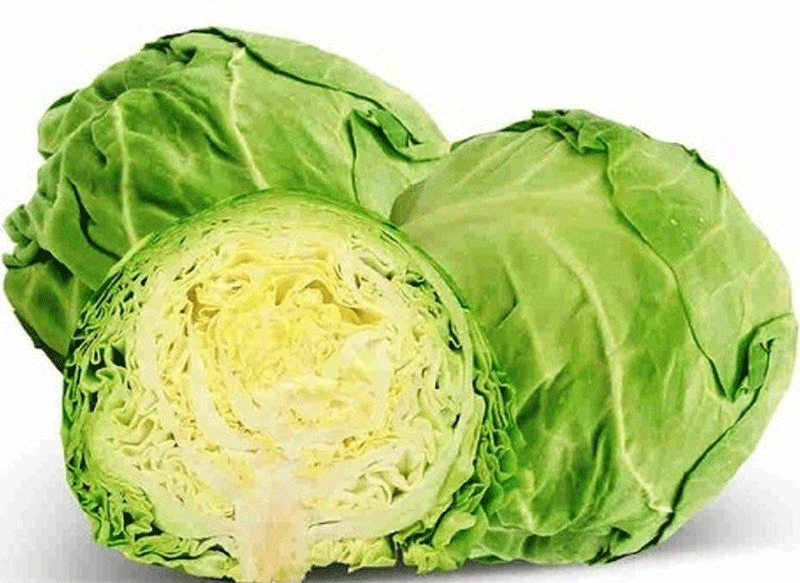
The first champion is the ‘Megaton’ F1 hybrid. A late-season titan, it matures in 140-170 days and is renowned for producing massive, dense heads weighing up to 10-12 kilograms. Its key strength for processing lies in its quality for fermentation; a single head can yield a substantial amount of crisp, flavorful sauerkraut. Following it is the aptly named ‘Aggressor’ F1 hybrid. While yielding more compact heads of up to 5 kg, this variety compensates with exceptional hardiness. It demonstrates strong resistance to head-splitting, Fusarium wilt (a common soil-borne fungal disease), and shows notably less damage from caterpillar pests. Its maturity period of 130-150 days offers a solid mid-to-late season option. Finally, the ‘Slava’ variety (often ‘Slava’ or ‘Gloria’) provides the fastest turnaround, maturing in just 120-130 days. Celebrated as the quintessential variety for fermentation, its heads are known for consistently producing a crisp, firm sauerkraut that retains its texture without softening.
The success of these varieties is not accidental but a result of targeted plant breeding for abiotic and biotic stress tolerance. Data from the global seed trade and agricultural extension services indicates a rising demand for vegetable varieties with built-in resilience. For instance, a focus on Fusarium resistance (like that in ‘Aggressor’) is increasingly critical, as noted in reports from the International Society for Horticultural Science, which links climate change to the spread of soil-borne pathogens. Furthermore, resistance to head-splitting is a vital trait that protects yield integrity during periods of irregular rainfall, a growing concern in many regions. The specific endorsements from Siberian growing channels provide practical, real-world validation of these varietal traits under extreme duress, making them promising candidates not only for Siberia but for any region facing volatile growing seasons.
In an era of increasing climatic uncertainty, the choice of crop variety is a fundamental risk-management decision. The proven track record of ‘Megaton’, ‘Aggressor’, and ‘Slava’ cabbage in Siberia offers a valuable blueprint for reliable production. Their combination of high yield, disease resistance, and superior processing quality addresses multiple pain points for growers. For farmers, agronomists, and agricultural engineers, integrating such resilient, purpose-bred varieties into production plans is a strategic step toward achieving consistent harvests, reducing dependency on chemical interventions, and securing a quality product for market, regardless of what the growing season may bring.