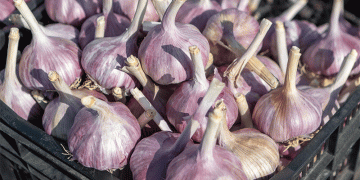





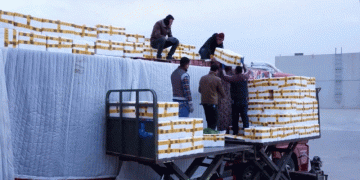

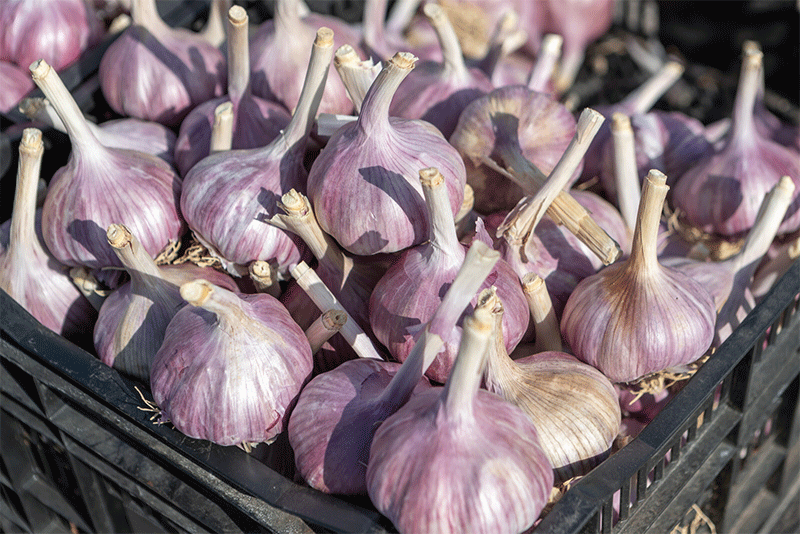
Russian phytosanitary authorities at St. Petersburg have made a significant interception, denying entry to a 27-ton shipment of fresh garlic from China. The cause was the discovery of a live adult insect, later confirmed via expert analysis to be the multivoltine scuttle fly (Megaselia scalaris), also known as the humpbacked fly. This organism is listed as a dangerous quarantine pest for the Eurasian Economic Union (EAEU). Consequently, the entire shipment has been prohibited from release and, at the owner’s request, is slated for complete destruction, resulting in a total economic loss for the importer.
This incident is not an isolated case but part of a persistent global challenge. The humpbacked fly is a highly polyphagous scavenger and pest, capable of infesting a vast range of organic matter, from decaying plant material and fungi to stored products like cheese and bulbs. Its ability to breed in contaminated food shipments and spread rapidly makes it a significant threat to food safety and agricultural storage. According to a 2023 global phytosanitary report by the International Plant Protection Convention (IPPC), interceptions of pests in fresh produce remain a leading cause of shipment rejections worldwide, with storage pests and flies representing a growing proportion of these incidents. The economic impact is twofold: direct losses from destroyed goods and long-term costs if a pest establishes itself, requiring expensive eradication programs. For Russia, a major global grain producer, preventing the establishment of such pests is paramount to protecting its own agricultural exports from potential quarantine restrictions imposed by other nations.
The destruction of 27 tons of garlic at the Russian border serves as a critical case study in the high-stakes arena of agricultural biosecurity. It demonstrates the effective functioning of surveillance systems but also highlights the persistent vulnerability of global supply chains to invasive species. For farmers, agronomists, and industry stakeholders, this reinforces the non-negotiable importance of integrated pest management (IPM) protocols from farm to shipment. It also underscores the need for exporters to adhere to strict phytosanitary standards and for importers to understand the severe financial and ecological risks of non-compliance. In an era of expanding trade, such interceptions are a necessary defense, protecting domestic agriculture from pests that could disrupt ecosystems, storage facilities, and market access.
