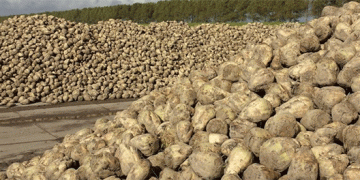










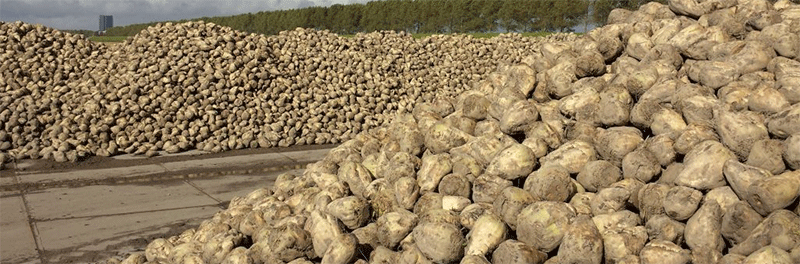
The Republic of Bashkortostan is demonstrating the powerful results of focused agricultural production and industrial synergy in the 2025 season. According to the regional Ministry of Agriculture, agricultural producers have achieved a record-breaking sugar beet yield of over 49 tonnes per hectare (490 centners/ha), leading to a total harvest exceeding 2.1 million tonnes from approximately 42,600 hectares. This exceptional productivity is now flowing through a highly efficient processing pipeline, with the republic’s two sugar factories having already processed over 1.09 million tonnes of the new crop as of December 19th.
This operational tempo is significant. With more than 1.168 million tonnes delivered to the factories—representing over half the gross harvest—the processing phase is well ahead of schedule. The factories are operating at a steady pace, processing no less than 10,000 tonnes per shift. The sugar yield is reported at 14%, a standard efficiency metric for the industry. This has resulted in the production of over 153,700 tonnes of sugar to date, a notable 10.9% increase compared to the same period last year. These figures highlight a system that is not only productive in the field but also robust in post-harvest logistics and industrial throughput.
This performance can be contextualized within broader trends. Russia has been steadily increasing its sugar beet yields and production, aiming for greater self-sufficiency. According to recent data from the Russian Ministry of Agriculture, the national average sugar beet yield has shown consistent growth, with leading regions often surpassing 50 tonnes per hectare. Bashkortostan’s achievement of nearly 49 t/ha positions it as a strong regional contributor to this national goal, showcasing the benefits of advanced agronomy, suitable varieties, and timely field operations.
The 2025 sugar beet campaign in Bashkortostan serves as a compelling case study in integrated agricultural success. For farmers and agronomists, the record field yields underscore the potential of optimized crop management and genetics. For agricultural engineers and factory operators, the efficient transport and high-capacity processing reflect a well-coordinated supply chain. For farm owners and scientists, the data reinforces that profitability hinges on closing the loop from superior field performance to streamlined industrial conversion. The key takeaway is that consistent investment in both on-farm productivity and off-farm logistics is essential to capitalize on genetic and agronomic potential, ensuring that a record harvest translates into tangible economic output.