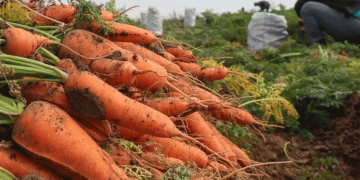




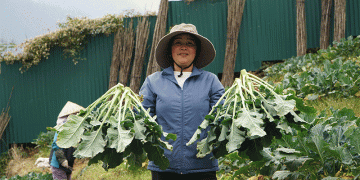


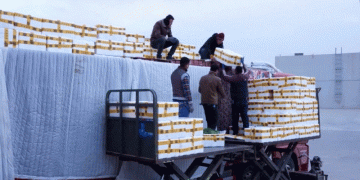






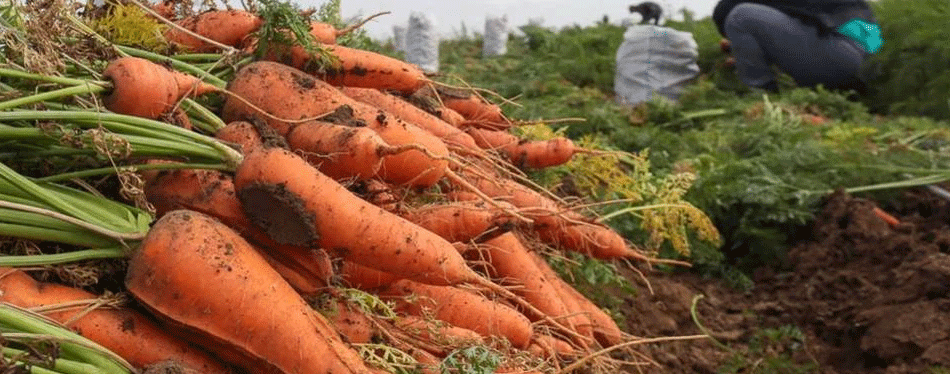
The Volgograd region has recently facilitated the export of a 120-tonne consignment of carrots and beets to neighbouring Kazakhstan. This shipment, validated as safe for export, highlights the ongoing agricultural trade links within the Eurasian region and the procedural backbone that supports them. According to the Rosselkhoznadzor (Russian Federal Service for Veterinary and Phytosanitary Surveillance) office for the Rostov, Volgograd, Astrakhan regions and the Republic of Kalmykia, the batch successfully underwent pre-export inspections and was issued the necessary phytosanitary certificates, clearing its path for international delivery.
While this specific shipment volume is modest, it represents a tangible data point within larger trade currents. Russia has consistently been a key vegetable exporter to Kazakhstan, with roots and tubers like carrots and beets forming a significant part of this trade. Volgograd Oblast, with its favourable climatic conditions and developed agricultural sector, is a traditional contributor to this supply chain. The region’s role is part of a broader national context; according to recent trade analyses, Russian vegetable exports have shown resilience and growth, with CIS countries like Kazakhstan remaining pivotal markets. The seamless execution of this shipment—from regional harvest to certified export—demonstrates the operational capacity of local producers and the integrated regulatory system that governs food safety and plant health for cross-border trade.
Conclusion: The export of 120 tonnes of vegetables from Volgograd is a microcosm of modern agricultural commerce. For farmers and farm owners, it reaffirms the value of adhering to high production and safety standards to access international markets. For agronomists and agricultural engineers, it underscores the importance of integrated pest management and post-harvest handling that meets stringent phytosanitary requirements. For scientists and industry stakeholders, this transaction highlights the necessity of robust, transparent certification systems that build trust and facilitate smooth trade. Ultimately, such exports are not merely about moving produce; they are about validating a region’s agricultural integrity and its ability to reliably participate in the complex web of global food supply.