








The recent data from St. Petersburg is a compelling microcosm of broader shifts impacting the agricultural sector. In 2025, nearly half (49%) of the city’s residents reported increasing their spending on vegetables and fruits, placing the region among the top five in Russia for growth in this expenditure category. The average monthly spend now ranges from 4,500 to 6,000 RUB, a significant jump from the 3,500-4,500 RUB range observed just a year prior.
Drivers of this demand, as identified by analysts, are twofold and nationally relevant: a sustained trend toward healthier lifestyles (HLS) and ongoing inflationary pressures. While inflation elevates nominal prices, the health and wellness movement is fundamentally reshaping consumption patterns, making fresh produce a non-negotiable budget priority for a growing segment of the population.
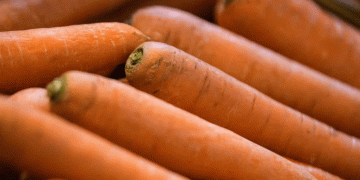
The consumer preference breakdown is particularly instructive for farm planning and breeding programs. The staple vegetables—potatoes (91%), cabbage (88%), and carrots (82%)—continue to form the demand backbone. However, the fruit basket tells a story of year-round expectation: bananas lead (84%), followed closely by apples (81%) and lemons (77%). This underscores a continuous market for reliable, high-quality storage crops (apples, potatoes) and a robust import-competing or controlled-environment agriculture (CEA) opportunity for tropical and subtropical favorites.
Globally, these trends resonate. According to the FAO’s 2023 State of Food and Agriculture report, leveraging digital technologies and data analytics to respond to consumer signals is key for improving the efficiency and sustainability of agri-food systems. Furthermore, a 2024 analysis by Rabobank emphasizes that inflation has accelerated the “premiumization” of food, where consumers prioritize spending on perceived staples of health, like fresh produce, while cutting back elsewhere. This aligns perfectly with the St. Petersburg data, where only 16% reduced their fresh produce budget despite economic pressures.
The increased expenditure in urban centers like St. Petersburg is more than a statistic; it’s a clear market signal. For farmers and agronomists, it confirms the resilient demand for core vegetable crops and highlights the importance of apple varieties that meet consumer taste and storage expectations. For agricultural engineers and scientists, it points to opportunities in enhancing supply chain logistics to maintain quality, in CEA technologies for localizing some “tropical” demand, and in breeding programs focused on both yield and nutritional quality. Ultimately, understanding these urban consumption shifts is critical for aligning production strategies with the dual forces of health-conscious demand and economic reality, ensuring both profitability and food security.