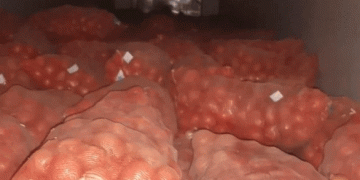





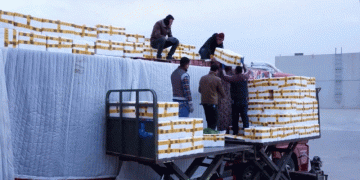





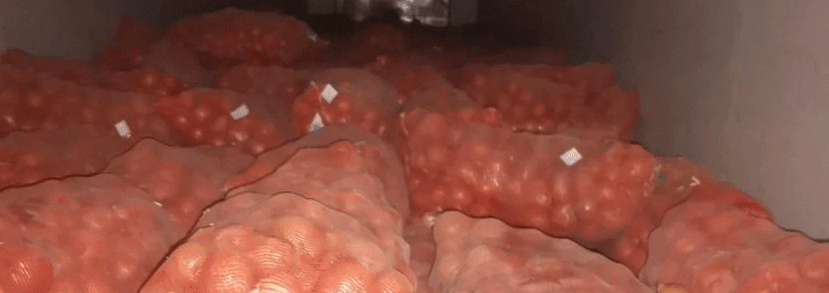
Phytosanitary authorities in Russia’s Chelyabinsk Oblast have denied entry to 40 tons of onions from Kazakhstan destined for the city of Yekaterinburg. The rejection occurred at the “Bugristoye” border checkpoint, but notably, the cause was not a biological contaminant. During inspection, officials from the Ural Interregional Directorate of Rosselkhoznadzor found that a significant portion of the cargo lacked proper mandatory marking. While bags on the visible exterior of the truck were labeled, those deeper in the load were not. As explained by the agency’s press secretary, Tatiana Nachtigal, complete marking—indicating product name, volume, date of manufacture, storage terms, country of origin, and supplier—is a fundamental part of phytosanitary documentation confirming legal origin. The absence of this traceability data made the import impossible.
This enforcement action highlights a tightening global focus on supply chain transparency that goes beyond traditional pest control. The incident falls under the Unified Quarantine Phytosanitary Requirements of the Eurasian Economic Union (EAEU), and the drivers faced administrative charges. While the specific penalty under Article 10.2 of Russia’s Administrative Code can involve fines, the immediate consequence was the full return of both trucks to Kazakhstan. This reflects a zero-tolerance approach for lapses in documentation. This trend is global. A 2024 report by the FAO on digital agriculture traceability emphasizes that incomplete or fraudulent labeling is a major risk for food safety, market integrity, and preventing the laundering of products from embargoed regions. Proper labeling is the first link in a chain of custody that allows for rapid recall in case of contamination and verifies compliance with sanctions or sustainability standards.
The halted onion shipment is a clear, costly lesson in the evolving rules of agricultural trade. For farmers, exporters, and logistics operators, it demonstrates that phytosanitary security now encompasses full-chain traceability. A perfectly healthy crop can be rendered unmarketable by logistical oversights in documentation. As global markets and regulatory bodies demand greater transparency to ensure food safety, authenticity, and compliance, investing in robust, verifiable labeling systems is no longer optional. This incident serves as a stark reminder that in today’s interconnected food system, the information on the bag is just as important as the produce inside it.
