




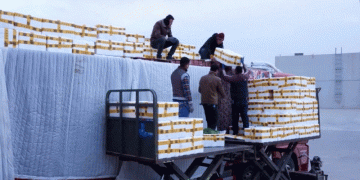

In the vast agricultural heartland of Russia’s Altai Krai, an unseen battle for biosecurity is underway at the border. From December 1st to 14th, 2025, officers from the Rosselkhoznadzor (the Federal Service for Veterinary and Phytosanitary Surveillance) for Altai Krai and the Republic of Altai conducted a rigorous inspection campaign. Their efforts resulted in the interception and rejection of 183 tons of high-risk agricultural products attempting to enter the country from neighboring Kazakhstan, Kyrgyzstan, and Afghanistan. These actions are not merely bureaucratic; they represent a vital frontline defense for one of Russia’s key farming regions.
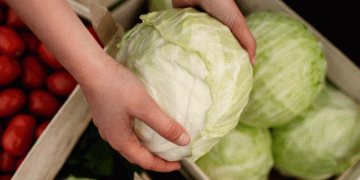
The recent operations targeted a significant volume of traffic, inspecting 160 vehicles carrying over 2,851 tons of regulated “quarantine” products. The violations that led to the rejections were varied and serious, providing a clear picture of the phytosanitary risks at play. Major infractions included the presentation of invalid or fraudulent phytosanitary certificates for shipments of fresh cabbage and onions, discrepancies between certified and actual shipment weights (with one case exceeding the certificate by more than 10%), and conflicting information between phytosanitary and transport documents for a large shipment of food-grade sunflower seeds. Additionally, a shipment of fresh pomegranates from Afghanistan was turned back for a complete lack of required packaging markings. This data illustrates that border control is a multi-faceted challenge, combating both accidental non-compliance and deliberate attempts to circumvent biosecurity laws.
These two weeks are part of a year-long, intensified enforcement trend. Since the start of 2025, authorities in the Altai region have inspected a staggering over 40,000 tons of high-risk products arriving via 2,504 vehicles. The cumulative results are telling: they have identified violations in over 1,067 tons of produce, plus significant volumes of regulated lumber and decorative greenery. This scale of interception underscores the persistent threat of introducing non-native pests, such as the cotton bollworm, the brown marmorated stink bug, or various fungal diseases, which could devastate local crops, necessitate costly eradication programs, and cripple export opportunities. The successful interagency cooperation highlighted by Rosselkhoznadzor—involving customs and border security services—proves essential for managing this immense flow of goods.
The decisive actions at the Altai border are a powerful reminder that modern farm profitability and regional food security are intrinsically linked to robust phytosanitary systems. For every ton of non-compliant cabbage or onions turned away, the region’s own producers are protected from potentially catastrophic invasive species. For farmers, agronomists, and industry stakeholders, this news reinforces the critical importance of supporting strong border controls and maintaining impeccable phytosanitary standards in their own operations, whether for import or export. In an era of globalized trade, a nation’s agricultural strength is measured not only by its yield but by the vigilance of its borders.
