









Vietnam’s horticultural sector is celebrating a monumental achievement, with fruit and vegetable exports expected to smash records by reaching $8.5 billion in 2025. This remarkable growth, driven by a powerful recovery in the latter half of the year, underscores a successful, albeit concentrated, export-led model. The figure represents not just increased volume but a strategic navigation of complex global market demands.
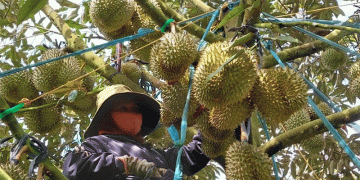
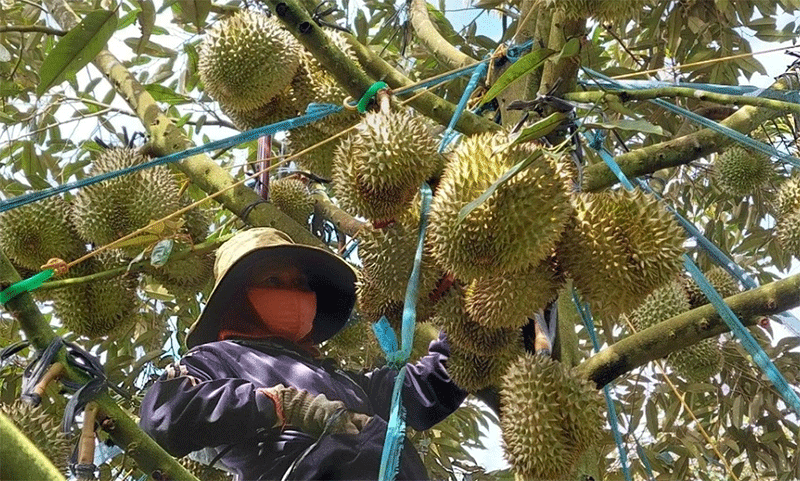
The engine of this growth is a focused portfolio of tropical fruits and a dominant market relationship. Six key fruits—durian, banana, mango, jackfruit, coconut, and pomelo—are the primary drivers. Durian, in particular, has become a cornerstone, capitalizing on surging demand. This reliance on a specific product basket carries both opportunity and risk, a dynamic highlighted in the World Bank’s 2024 Future of Food report, which cautions against over-specialization while acknowledging its short-term economic benefits.
The concentration is even more apparent in market destinations. A staggering 64% of total export value, approximately $5 billion in the first 11 months, flows to China alone, representing a 15% year-on-year increase. This dependence was tested early in 2025 when China tightened regulations on residues like hydrogen sulfide and cadmium. The sector’s resilience was proven as authorities collaborated to resolve technical barriers, leading to a recovery from June onward. New protocols for bananas, coconuts, and passionfruit have now unlocked further access. Meanwhile, diversification efforts show promise, with exports to the United States jumping 56% to about $500 million, demonstrating the potential in overcoming tariff challenges.
A critical response to stringent import requirements is the government’s pilot project for durian origin traceability, launching January 1, 2026. This initiative aims to build an integrated system linking the entire supply chain—from farm to export—utilizing QR codes, NFC, or RFID for real-time electronic verification. This move aligns with a global shift; a 2023 OECD study on Digital Opportunities for Sustainable Agri-Food Systems identified blockchain and digital traceability as non-negotiable tools for maintaining market access, ensuring food safety, and building consumer trust in premium products.
Vietnam’s $8.5 billion export milestone is a masterclass in targeted agricultural trade. It validates the power of aligning production with a major neighbor’s consumption trends but also starkly reveals the vulnerabilities of over-reliance on a single market and a handful of crops. The forward-looking strategy is clear: sustain momentum in the core China market through digital traceability and strict compliance, while actively cultivating growth in secondary markets like the U.S. For producers and policymakers worldwide, the key takeaway is that modern export success requires a dual focus—excelling in both biological cultivation and digital supply chain management to meet the twin demands of quality and transparency.