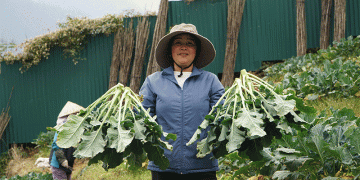









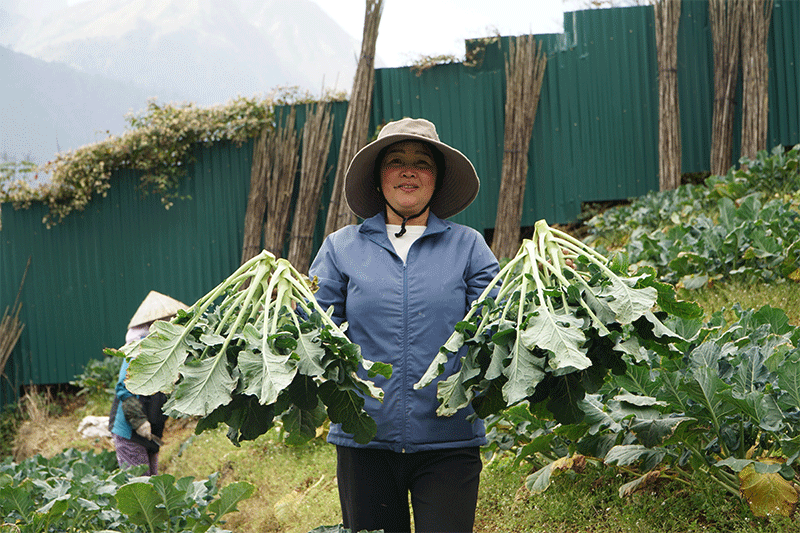
In the highlands of Sapa, Vietnam, farmers are not just growing vegetables; they are strategically cultivating in the market’s temporal gaps. Amid a nationwide price surge driven by off-season scarcity and natural disasters elsewhere, Sapa’s cool climate has become a powerful economic asset. Families like that of Hoang Tien Quy are capitalizing, generating substantial income by deliberately planting crops like cauliflower and cabbage for harvest in the 10th and 11th lunar months, far outside the typical August-September cycle. This counter-cyclical approach allows them to achieve remarkable price points: up to 30,000 – 50,000 VND/kg for cauliflower and 17,000 – 18,000 VND/kg for cabbage, contributing to annual household incomes exceeding 200 million VND.
The scale of this strategic farming is significant. Sapa dedicates over 250 hectares to diverse vegetable cultivation, with more than 80 hectares utilizing advanced agricultural techniques concentrated in areas like O Quy Ho and Ham Rong. This intensive farming generates an impressive average economic value of over 110 million VND per hectare for winter vegetables. The model hinges on two key elements: Sapa’s inherent cool climate advantage, which allows for summer vegetable production when lowlands are too hot, and the deliberate timing shift to fill supply voids. As farmer Nguyen Thi Thin notes, adverse weather in other regions has exacerbated supply shortages in 2025, creating an even more lucrative window for those with harvest-ready crops.
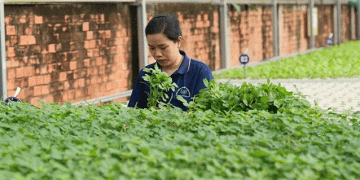
This success mirrors a broader trend in high-value horticulture. A 2024 report by the FAO on Mountain Agriculture highlighted that niche, climate-advantaged regions can achieve superior profitability by specializing in off-season production and quality-focused cultivation. However, it also warns of risks, including market volatility and the need for constant technological adaptation. Sapa’s farmers acknowledge this, citing soil preparation, seed selection, and pest control as critical, with most households actively integrating advanced techniques to extend growing periods and ensure yield stability.
Sapa’s vegetable sector presents a masterclass in market-aligned agronomy. It demonstrates that superior profitability often lies not in growing more, but in growing when others cannot. By leveraging their unique microclimate to execute precise seasonal shifts, farmers transform geographical and climatic traits into direct economic premium. For agronomists and farmers worldwide, the lesson is clear: profound market awareness—understanding regional supply gaps and consumer price sensitivity—must be integrated into the cultivation calendar itself. The future of competitive small-holder farming may well depend on this ability to strategically manipulate seasonality and leverage local advantages to meet demand at its peak.