








As the Lunar New Year approaches, farms in Vietnam’s Tay Ninh province transform into hubs of strategic cultivation. This period represents a critical economic window where timing is as valuable as yield. Farmers are not merely growing crops; they are engineering harvests to coincide precisely with the Year of the Tiger celebrations, aiming to capitalize on peak demand and premium pricing.
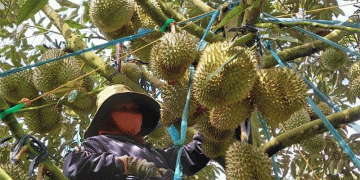
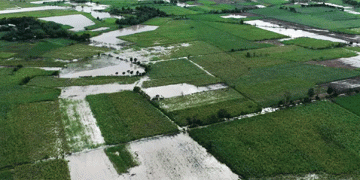
The preparation is a lesson in advanced crop scheduling. Pineapple farmer Tran Van Le, cultivating over 2 hectares, began applying growth stimulants in the 8th lunar month to force fruit for Tet. He anticipates a 5-ton harvest, relying on the region’s acidic soil to enhance fruit color and sweetness. However, he cites a sharp increase in input costs due to flooding, highlighting a widespread vulnerability. Similarly, fruit grower Tran Van Net faced significant climate disruption: unpredictable rains washed away pollen during the first two flowering cycles of his Thai custard apples. Only intervention and persistence led to a successful third bloom, securing an expected 4-ton supply of mixed fruits for the holiday. These stories underscore findings in a 2024 FAO report on Climate-Smart Agriculture in Southeast Asia, which notes that increasing rainfall variability is forcing farmers to adopt more resilient practices and diversified flowering schedules to ensure marketable yields.
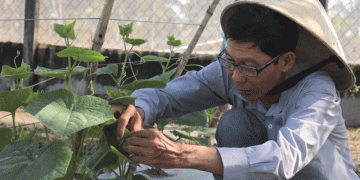
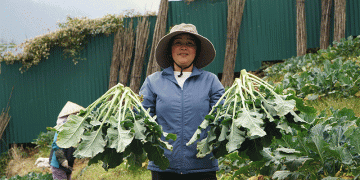
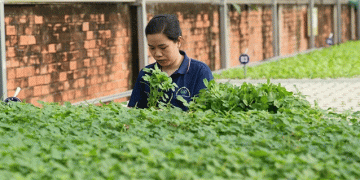
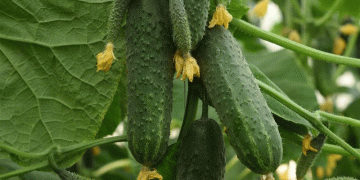
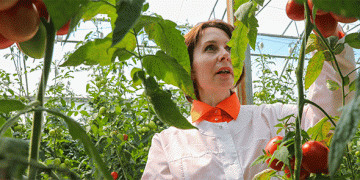
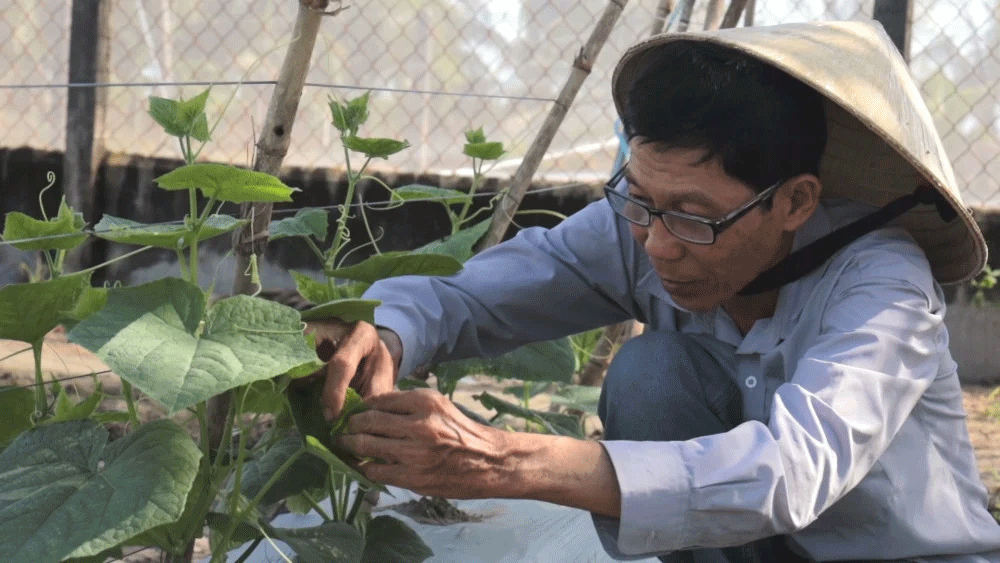
For vegetable cooperatives, the strategy revolves around consistent quality and disease management. The Clean Vegetable Production Cooperative in Chau Thanh district employs a strict 27-30 day protocol from transplanting to harvest, with targeted pest control at 7-day and 10-day intervals. This regimented care, combined with favorable cool weather, ensures leafy greens like amaranth and mustard meet the high standards of the holiday market. Current prices for these greens are stable at 8,000-9,000 VND/kg, allowing a cooperative household to net approximately 10 million VND per month per 1,000 sqm. Meanwhile, cucumber farmer Huynh Tan Chung tends to a 0.5-hectare plot, targeting a high-value market where cucumbers fetch 15,000-20,000 VND/kg, despite battling wind damage and leaf blight.
The race to supply the Tet market is a microcosm of modern agricultural challenges and opportunities. It demonstrates that profitability hinges on a complex equation: mastering biological timetables through growth regulators and precise cultivation, mitigating escalating climate risks like flooding and unseasonal rain, and rigorously managing post-transplant crop health. Success belongs to those who can synchronize agronomy with market calendars, transforming seasonal pressure into a premium. For agronomists and farmers globally, it reinforces that understanding local festival economies and building climate resilience into production schedules are essential strategies for maximizing farm income.