



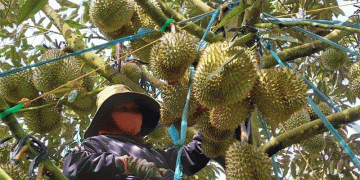

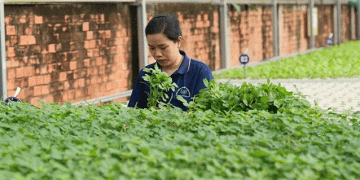


Against the backdrop of recent storms, farmers in Vietnam’s Đồng Tiến commune are in a race against the calendar. They are meticulously tending to over 266 hectares of vegetables—a mix of open fields, homestead gardens, and sophisticated greenhouses—all with a single goal: to ensure a bountiful harvest for the Tết (Lunar New Year) market. This period, which falls in late January 2026, represents the year’s peak demand for fresh produce, making successful cultivation both an economic imperative and a testament to local agricultural resilience.
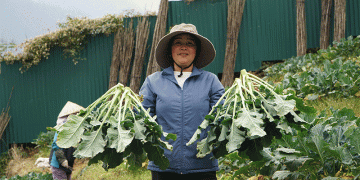
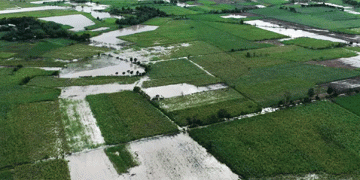
The push for production is a story of swift recovery. Following damaging storms and floods, local farmers took immediate initiative to rehabilitate their land. As shared by farmer Trần Thị Tân, proactive preparation allowed crops like sweet potatoes and cabbage on her 5-acre plot to thrive. The scale of ambition is significant. The commune’s 266-hectare vegetable area solidifies its position as a major regional production hub. This effort is supported by broader provincial initiatives, such as those highlighted by the Hà Tĩnh Farmers’ Union, which aims to promote innovation and develop commodity agriculture through digital transformation and value-chain linkages in the coming years.
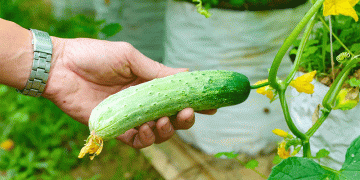
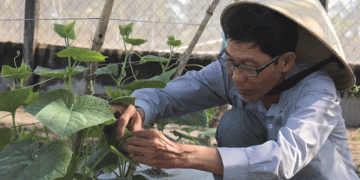
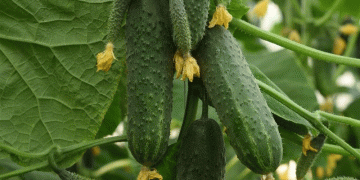
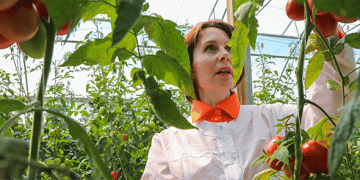
A key feature of this recovery is the strategic use of technology to guarantee yield and quality. The most prominent example is Mr. Đặng Thế Bầu’s intensive greenhouse operation. Spanning over 6,000 square meters and specializing in cucumbers and melons, his system utilizes enclosed care protocols and drip irrigation technology. This advanced setup enables precise control over the growing environment, allowing for an impressive three harvest cycles per year and safeguarding production against unpredictable weather. While focusing on critical care tasks like weeding and pest monitoring, farmers are also harvesting early-maturing crops to clear land for new plantings, maximizing land use efficiency in the tight pre-Tết window.
Looking beyond the immediate season, Đồng Tièn commune is planning for a sustainable future. Local authorities are actively encouraging the adoption of more scientific farming methods, the selection of higher-value crops, and the expansion of production areas. A central pillar of this strategy is the creation of a branded identity—”Đồng Tiến Vegetables and Fruits”—to enhance market recognition and value. This forward-looking approach aligns with regional agricultural development goals, aiming not just to recover from setbacks but to build a more robust, profitable, and recognizable agricultural sector for the farmers of Hà Tĩnh.
The determined efforts of Hà Tĩnh’s farmers underscore the critical importance of resilience, timing, and technological adoption in modern agriculture. Their successful recovery from climatic adversity to meet the high-stakes seasonal demand of Tết is a powerful case study. It demonstrates that integrating proactive farming practices with targeted technology, such as protective greenhouses and efficient irrigation, is essential for risk mitigation and income stability. Furthermore, the strategic move towards branding and quality improvement points the way to a more prosperous and sustainable agricultural model, where farmers are not just producers but valued participants in a strengthened market chain.
