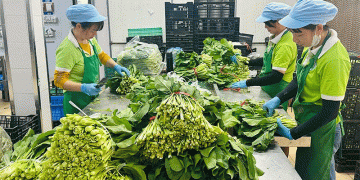




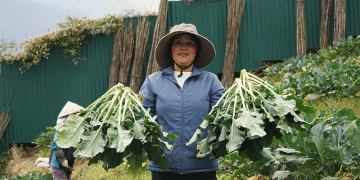
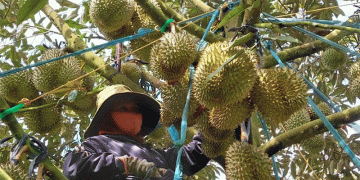
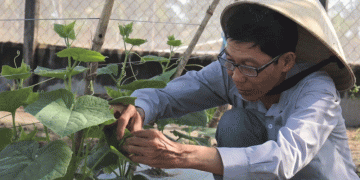

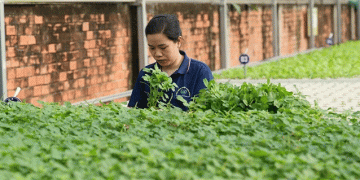
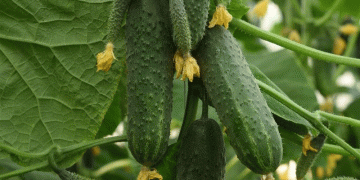
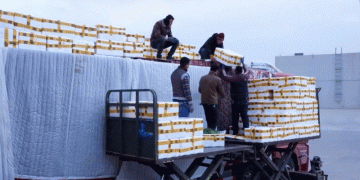


Urban centers globally are grappling with the dual challenges of ensuring food security for dense populations and managing the environmental impact of their food supply chains. Hanoi, Vietnam, is responding with a formidable, state-led plan that merges agricultural zoning, stringent safety standards, and digital integration. The city’s People’s Committee has unveiled a strategy to develop concentrated, safe vegetable cultivation areas, targeting an annual output of over 400,000 tons by 2030. This initiative is not merely about volume; it is a holistic redesign of the production chain, mandating full traceability and linking cultivation directly to processing and consumption markets. The plan positions Hanoi as a laboratory for modern, peri-urban agriculture on a massive scale.
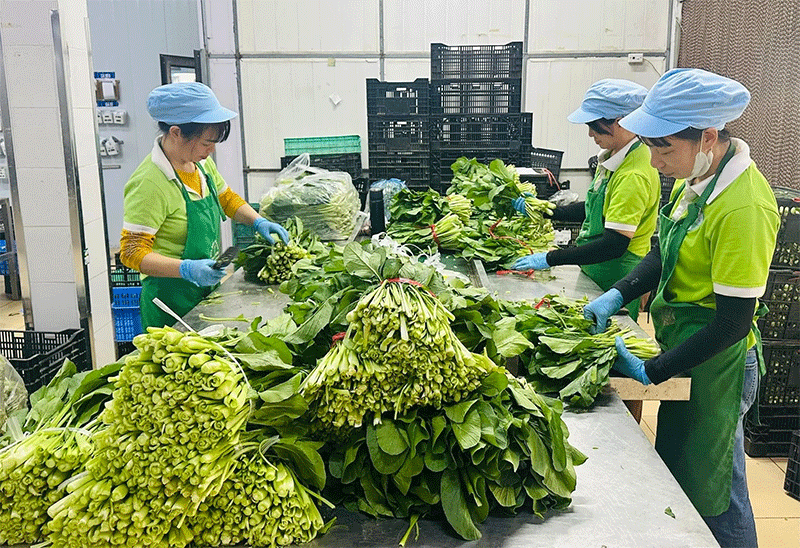
The technical pillars of the strategy are comprehensive and ambitious. Food safety and residue management are paramount, with a goal to keep pesticide residues below permissible limits in over 90% of specialized zones. To ensure compliance and build capacity, the city plans extensive training, aiming for 100-150 farmer training sessions annually, reaching an estimated 10,000 people. A core objective is to scale advanced quality management systems, expanding the use of GMP, HACCP, and ISO 22000 protocols. Furthermore, over 30% of safe vegetable output from concentrated areas will be fully traceable, a figure that speaks to a significant investment in supply chain digitization. This push for traceability and safety is directly linked to market access, with a focus on meeting the import requirements of key export markets like the US, China, Japan, Korea, and the EU.
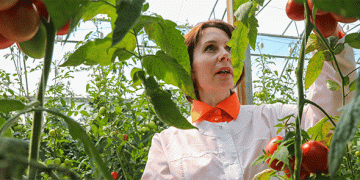
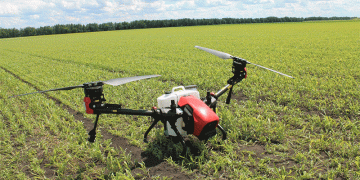
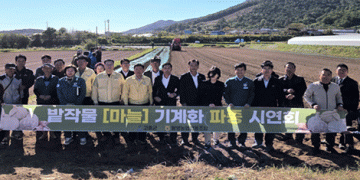
Perhaps the most forward-looking aspect of the plan is its embrace of smart agriculture and mechanization. The strategy explicitly calls for the application of precision farming, smart technology, tissue culture, and substrate cultivation. Mechanization is to be accelerated across all stages—from soil preparation and planting to spraying and quick cooling—including the adoption of drones and water-saving irrigation systems. The city also aims to strongly develop greenhouse, net-house, and smart organic farming models combined with tourism. This technological thrust is supported by a data infrastructure goal: applying information technology to manage data on seeds, fertilizers, land, and weather to improve oversight efficiency. This aligns with global trends where, according to the World Bank, digital agriculture technologies can improve yields by up to 30% and significantly reduce input waste and environmental footprint.
Hanoi’s 2030 vegetable plan is a seminal case study in the state-led transformation of an urban food system. It moves far beyond traditional subsistence or market-gardening models, envisioning a highly organized, technology-infused, and market-integrated agricultural sector. For farmers, agronomists, and engineers, the plan underscores several critical success factors for modern agriculture: 1) Scale with Standards: Concentrated production zones are viable only when paired with universally enforced safety and quality protocols (VietGAP, PGS, organic). 2) Training as Infrastructure: The massive investment in farmer education is recognition that technology adoption depends first on human capital. 3) Traceability as a Market Asset: Digital tracking is framed not as a bureaucratic burden but as a prerequisite for accessing premium domestic and international markets. The plan’s ultimate test will be in its on-ground implementation and its ability to deliver economic returns that justify the investment for smallholder farmers. If successful, it will provide a powerful template for how megacities can proactively shape resilient, safe, and productive agricultural hinterlands.
