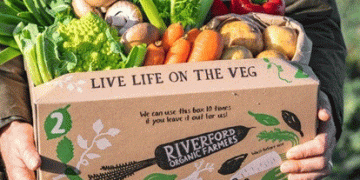











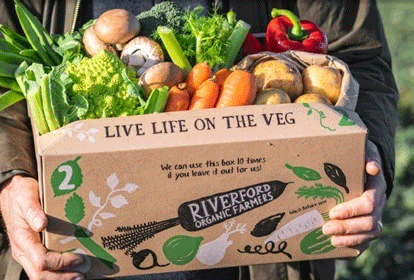
In the world of sustainable agriculture, where soil health and ethical practices are paramount, a new currency is rapidly gaining value: data. Riverford Organic Farmers, the UK’s pioneering employee-owned, B Corp-certified vegetable box scheme, is making a decisive move to master this currency. The company has appointed the data and analytics agency Incubeta without a pitch to architect and implement a comprehensive data analytics master plan. This partnership marks a critical evolution for the direct-to-consumer (D2C) farm model, shifting from intuition-led growth to a strategy powered by high-quality, reliable data and precision-targeted marketing.
Launched in 1986 by Guy Singh-Watson, Riverford grew from delivering 30 boxes to friends into a national leader by championing taste, sustainability, and fair practices. Now, as Jennifer North, Riverford’s Ecommerce Director, states, the company recognizes that “data and measurement are fundamental to driving our digital growth and understanding our customers better.” The core of Incubeta’s brief is to build a modern server-side tagging infrastructure and establish a unified data foundation within Google Analytics 4 (GA4). This technical backbone is not an end in itself but a means to a crucial agricultural business goal: empowering teams to make smarter, data-driven decisions aligned on consistent performance metrics. In a sector with razor-thin margins and perishable inventory, understanding customer acquisition cost, subscription retention rates, and regional demand patterns for specific produce can mean the difference between sustainable growth and wasteful surplus.
The ultimate aim is sophisticated audience segmentation. By leveraging custom audiences and advanced GA4 features, Riverford’s marketing can move beyond broad messaging to personalized communication. This could mean tailoring campaigns to customers who favor leafy greens, targeting promotions for seasonal gluts to reduce food waste, or re-engaging lapsing subscribers with specific offers. This level of precision is becoming a competitive necessity. The UK’s online grocery market continues to grow post-pandemic, with players large and small vying for the ethically-conscious consumer. A 2024 report by IGD estimated the UK online grocery market to be worth over £20 billion, with a significant portion of growth driven by demand for convenience and values-led shopping. For a mission-driven company like Riverford, data is the tool to efficiently connect its ethically produced food with the exact customers who value it most, ensuring that marketing investment directly supports its core agricultural and social values.
Riverford’s strategic investment in a data analytics master plan is a landmark moment for the sustainable agriculture sector. It demonstrates that for modern agribusiness—even one rooted in organic principles and employee ownership—technological sophistication is not a contradiction but a catalyst. By building a robust data infrastructure, Riverford is positioning itself to deepen customer relationships, optimize its complex supply chain from regional farm to doorstep, and achieve growth that is both scalable and aligned with its founding ethos. For farmers, agronomists, and farm owners observing this shift, the lesson is clear: the future of profitable, resilient direct-to-consumer agriculture lies at the intersection of exceptional produce and exceptional customer insight. Data is no longer just for industrial farms; it is becoming an essential tool for any agricultural enterprise seeking to thrive in a crowded, digitally-driven marketplace.
