


In the heart of Yunnan Province, Midu County is systematically transforming its agricultural identity. Moving beyond its poetic reputation as the “Land of Homesickness by Flowing Streams,” it is now firmly establishing itself as a “Green Vegetable Industrial Park.” This strategic shift is powered by a forward-looking mantra: “organic, digital, technological, and facility-based”. This isn’t just a slogan but an operational blueprint, positioning Midu as a compelling case study in how to integrate ecological principles with cutting-edge agri-tech to drive rural revitalization and meet the stringent demands of modern food markets.
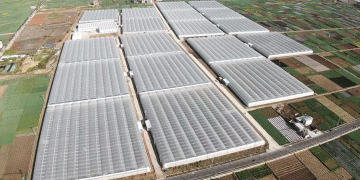
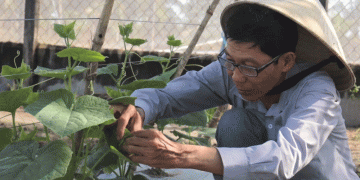
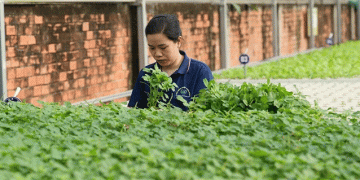
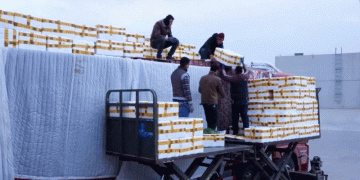
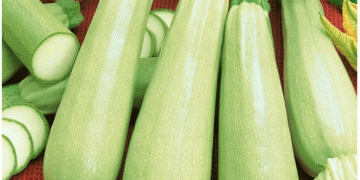
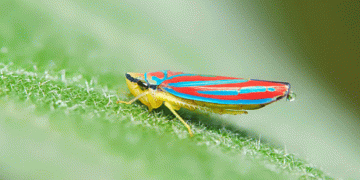
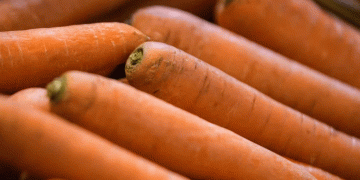
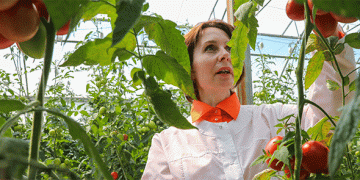
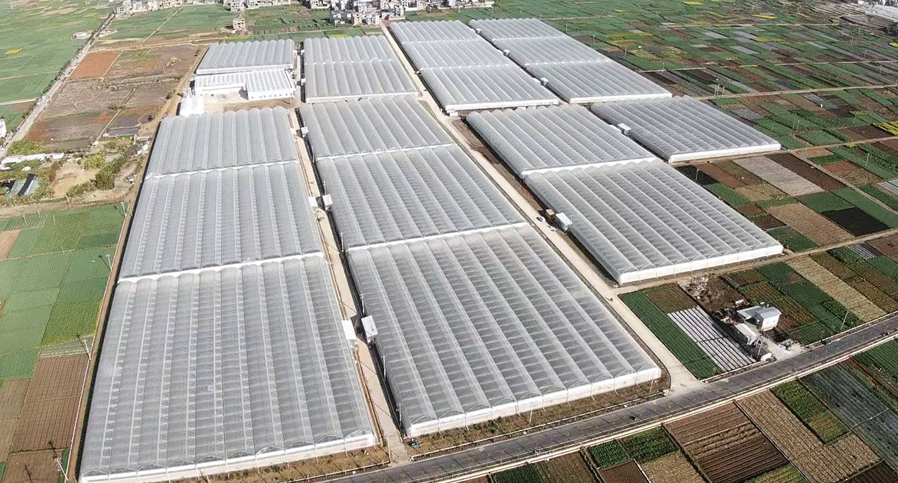
The flagship operation, run by Midu Nature Star Agricultural Technology Co., Ltd., showcases this integrated model. Its core is a 363-acre complex of interconnected, low-carbon intelligent greenhouses. Within these controlled environments, precision is paramount. Integrated water-fertilizer drip systems and smart climate control manage every variable. This technological backbone supports a strict “Premium Varieties + Ecological Management” protocol. As Base Manager Zhang Pei explains, the system relies on organic fertilizers replacing chemical ones and biological pest control replacing pesticides. The results are vegetables that achieve certified organic status, commanding premium market recognition. The model’s success is fueling expansion: a second-phase project will add 400 acres of production base by June 2026, aiming to boost annual output to 4,500-5,000 metric tons and create over 200 new local jobs.
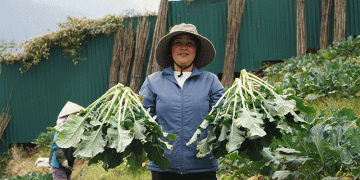
Midu’s ambition extends beyond a single corporate farm. The county government is actively scaling these practices across the landscape. It promotes comprehensive green production methods, including soil testing and formulated fertilization and soilless cultivation, to optimize local farm operations. Crucially, it is building a circular agricultural system through pilot projects for livestock manure resource utilization, turning waste into nutrient-rich organic inputs. This systemic approach is yielding significant scale: to date, Midu has established over 10,000 acres of standardized facility-based vegetable production bases and 16,000 acres of green and organic product bases. This aligns with broader national and global trends. According to a 2023 report by the Chinese Academy of Agricultural Sciences, China’s protected horticulture (greenhouse) area exceeds 4 million hectares, with a strong push toward technology-driven, sustainable intensification to ensure food security and safety.
Midu County’s journey offers a replicable template for the future of high-value, sustainable vegetable production. It successfully demonstrates that true modern organic farming is not a return to low-yield past practices but a sophisticated synthesis of ecology and technology. The key takeaways are: 1) Scale through Infrastructure: Large-scale, tech-enabled facilities provide the control necessary for consistent, high-quality organic output. 2) Closed-Loop Systems: Integrating crop and livestock waste management is essential for genuine sustainability and input cost reduction. 3) Digital Enablement: Data-driven management of water, nutrients, and climate is non-negotiable for efficiency and traceability. For global farmers and agronomists, Midu illustrates that competitiveness in the organic sector increasingly depends on such integrated systems. It proves that rural revitalization can be powered by creating high-skilled agricultural jobs within a knowledge-intensive, environmentally restorative, and economically viable industry, turning “homesickness” into a forward-looking homeland of innovation.
