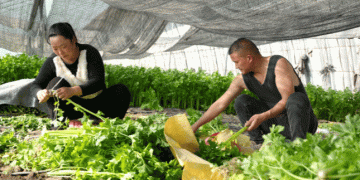




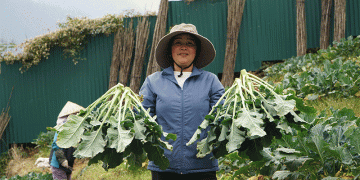
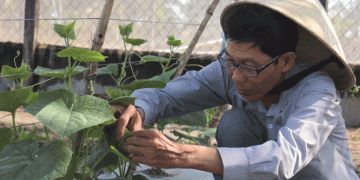

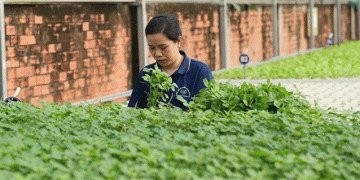
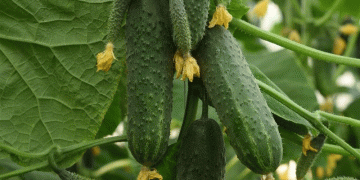
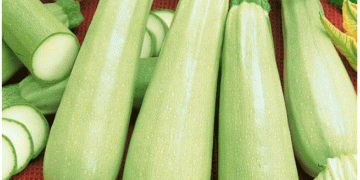


In the high-altitude, arid climate of Wensu County in Xinjiang, China, a quiet agricultural revolution is taking place inside rows of greenhouse. Here, where the Tianshan Mountains meet the vast plains, growers are leveraging a unique natural endowment—abundant sunlight and significant diurnal temperature variation—to cultivate premium, certified organic vegetables, even during the bitter cold of winter. By integrating protected horticulture with strict organic protocols, they are not only securing local “vegetable basket” supply but also carving out a lucrative niche in a health-conscious market, providing a compelling model for sustainable, high-value crop production in challenging environments.
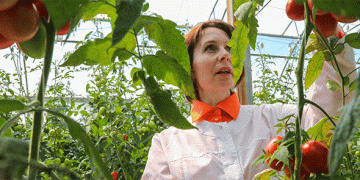
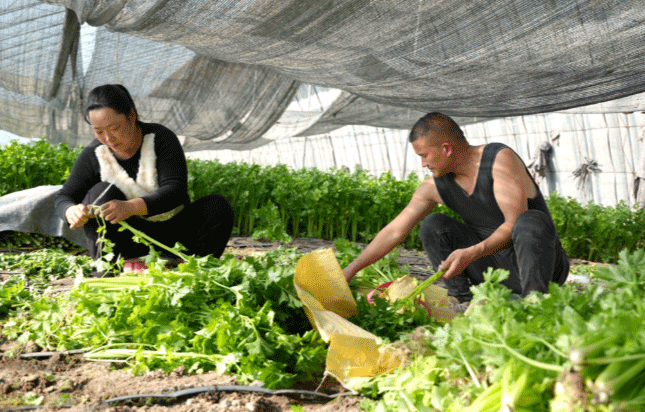
The core of Wensu County’s strategy is a calculated embrace of controlled-environment agriculture and regenerative practices. To overcome the limitations of a cold, snowy winter climate, farmers have adopted greenhouse facilities that enable off-season production and year-round supply. Inside these structures, the commitment to organics is absolute. Farmers like Wang Xiang have completely replaced synthetic fertilizers with fully decomposed organic amendments like sheep manure and straw. This is coupled with high-efficiency drip irrigation systems for precise water and nutrient delivery, a critical innovation in a region where water conservation is paramount. Pest management is achieved through an Integrated Pest Management (IPM) system utilizing physical barriers (anti-insect nets), biological controls (ladybugs), and pheromone traps instead of chemical pesticides, ensuring produce meets stringent organic safety standards.
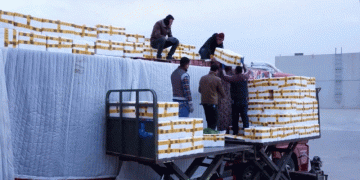
The economic and supply chain model is as sophisticated as the agronomic one. Wensu County has established a dual-channel “online + offline” sales system to ensure market access and premium returns. Offline, partnerships with local supermarkets, farmers’ markets, and restaurants guarantee “same-day harvest, same-day market” freshness. Online, sales are expanded through e-commerce platforms, community group buying, and social media marketing (including short videos). This direct-to-consumer approach builds the “Wensu Organic” brand and captures greater value. The county’s agricultural extension services provide full-cycle technical support, from varietal selection to pest management, a key factor in achieving reported yields like four harvests of leafy greens per year with a 60-day cycle from seedling to market. This intensive, high-turnover model maximizes greenhouse productivity and farmer income.
The success of Wensu County’s winter organic vegetable industry offers powerful lessons for growers, agronomists, and policymakers worldwide. It demonstrates that regions with climactic constraints can transform perceived weaknesses—like cold winters—into strengths for controlled, high-value production. The model hinges on a synergistic triad: 1) Technology Adoption (greenhouses, drip irrigation), 2) Regenerative Practices (organic amendments, IPM) that build soil health and ensure premium certification, and 3) Market-Linked Strategy (brand building, multi-channel sales). This approach moves beyond basic subsistence farming to create a resilient, profitable agricultural enterprise that addresses food security, environmental sustainability, and rural economic development simultaneously. For the global agricultural community, Wensu stands as proof that the future of resilient farming lies not in fighting nature, but in intelligently managing micro-environments to produce what the modern market demands most: safe, healthy, and sustainably grown food.
