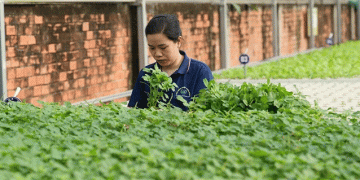



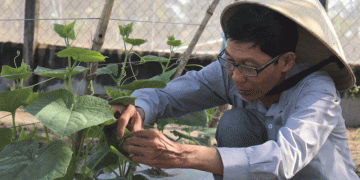
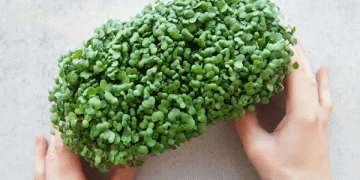
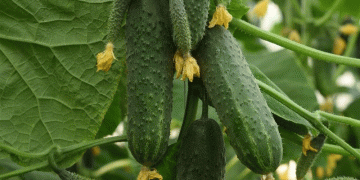
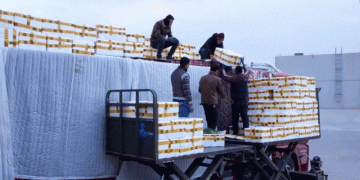



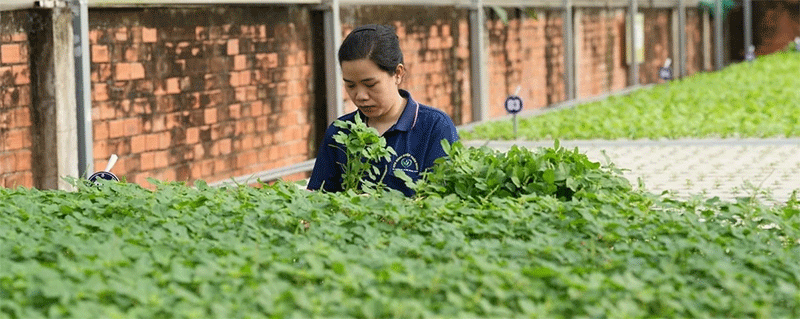
Facing the universal pressure of urbanization and shrinking farmland, the Tuan Ngoc Hydroponic Vegetable Cooperative in Ho Chi Minh City presents a compelling vision of agriculture’s future. Operating a 10,000 sqm network of IoT-controlled greenhouses, the cooperative has increased its monthly output from 3 tons in 2019 to an impressive 27-30 tons today. This showcases a scalable model for adding value through guaranteed quality, consistency, and premium pricing in urban environments.
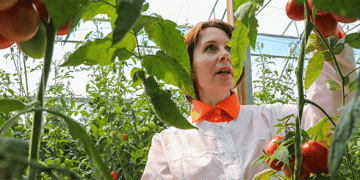
The technical foundation of their success is a closed-loop, static hydroponic system using inert coconut coir substrate. This method, managed via a centralized IoT platform, allows for precise environmental control. Sensors automate everything: cooling mist systems activate when temperatures exceed 32°C, roofs adjust for sunlight, and circulation fans manage humidity. This technology reduces water consumption by up to 70% compared to traditional farming and optimizes plant growth. Nutrition is delivered via a recirculating system using imported, multi-mineral solutions, ensuring purity and taste.
Crucially, their “4-Prohibitions” protocol is what builds consumer trust and justifies a market price 1.5 to 2 times higher than conventional produce. This strict standard prohibits: 1) Chemical pesticides (using homemade bio-preparations from ginger, garlic, and chili instead), 2) GMO or non-traceable seeds, 3) Heavy metal contamination, and 4) E. coli or Salmonella pathogens. The result is a clean, “ready-to-eat” product supplied directly to high-end supermarkets, organic stores, and hotels.
This model directly addresses key challenges highlighted in recent agri-tech analyses. A 2024 report by the World Bank on Transforming Agriculture in Southeast Asia emphasizes that climate resilience and resource efficiency are non-negotiable for modern farms. Furthermore, a study in Nature Food notes that consumer-driven demand for “clean label” produce is creating premium market segments exactly like the one Tuan Ngoc successfully supplies, proving that high-tech investment can yield direct financial returns.
The Tuan Ngoc Cooperative demonstrates that the future of profitable, sustainable farming in land-constrained regions lies in vertical integration of technology, biology, and market strategy. It’s not merely about installing sensors, but about building an entire ecosystem—from seed selection and biological pest control to IoT-driven resource management and direct premium market access. For farmers and agronomists worldwide, this case proves that overcoming space limitations and climate volatility is possible. It requires a shift from being solely growers to becoming precision managers of controlled biological systems, with data as the most valuable crop.