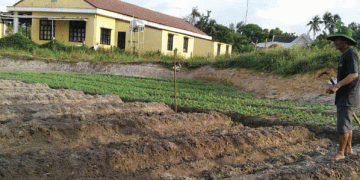



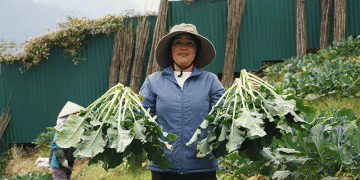
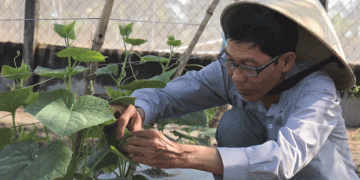
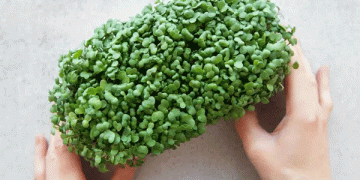
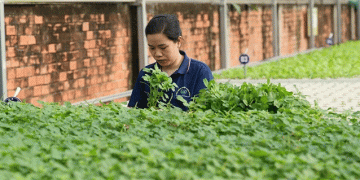
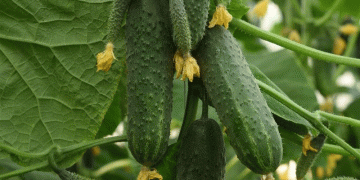
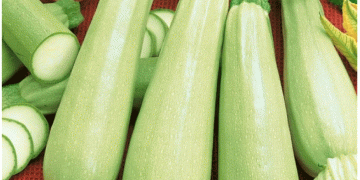

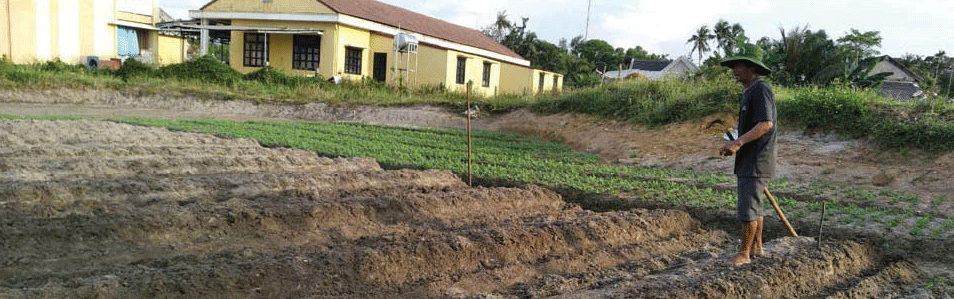
In Vinh Loc commune, a quiet agricultural transformation is underway. Motivated by the positive signals from pilot models, local authorities and farmers are deliberately transitioning to clean and organic agriculture, viewing it as a sustainable foundation for development. This shift is strategic and data-driven, moving beyond ideology to focus on value addition and market positioning. The commune has established pilot projects including 7.5 hectares of organic peanuts in the My Hai cooperative, 3.5 hectares of diverse vegetables, and a 1-hectare Vinh Hung melon field certified under VietGAP standards. Initial success is evident: the My Hai cooperative reports an organic peanut yield of 22 tons per hectare, and its processed organic peanut oil sells for 230,000 VND per liter—a premium of over 53% compared to conventional oil at 150,000 VND. Products like the Vinh Hung melon and My A peanut butter have earned 3-star OCOP (One Commune One Product) recognition, unlocking access to distant markets like Ho Chi Minh City.
This transition, supported by international projects like those from Luxembourg, addresses the universal challenges of shifting entrenched practices. The initial higher investment and steep learning curve are being overcome through technical training, access to clean inputs, and, crucially, a clear market linkage strategy. The commune’s forward-looking plan for 2026-2030 aims to scale up significantly: an 18-hectare organic peanut zone, 5 hectares of vegetables, and 1.5 hectares of melons, alongside expanding bio-secure livestock and VietGAP aquaculture. The anticipated payoff is substantial, with the value of clean agricultural products expected to be 1.3 to 5 times higher than traditional counterparts. This aligns with global FAO analysis indicating that certified organic products in developing economies can achieve farmgate price premiums of 20-50%, and often more for processed goods.
The Vinh Loc model’s sophistication lies in its integrated approach to the entire value chain. It’s not just about production but encompasses branding (creating the “Vinh My” organic vegetable label), traceability, packaging, and intellectual property registration. A dedicated physical store for organic products and a planned e-commerce platform aim to bridge the last mile to consumers. Furthermore, the commune is proactively forging contracts with corporations, supermarkets, and local institutions like schools to secure stable offtake, ensuring farmers’ peace of mind.
Vinh Loc’s journey offers a compelling case study for agricultural professionals worldwide. It demonstrates that transitioning to sustainable practices is a viable economic strategy when paired with certification for credibility, processing for value addition, and proactive market linkage for security. The commune’s systematic plan—combining plot-level pilots, cooperative organization, branding, and multi-channel sales—provides a replicable blueprint. It proves that the higher margins of clean agriculture are accessible not only to large exporters but also to smallholder communities, provided there is committed local leadership, targeted external support, and a relentless focus on connecting quality production to premium markets. The ultimate yield is not just in tons per hectare, but in resilience and income per farmer.
